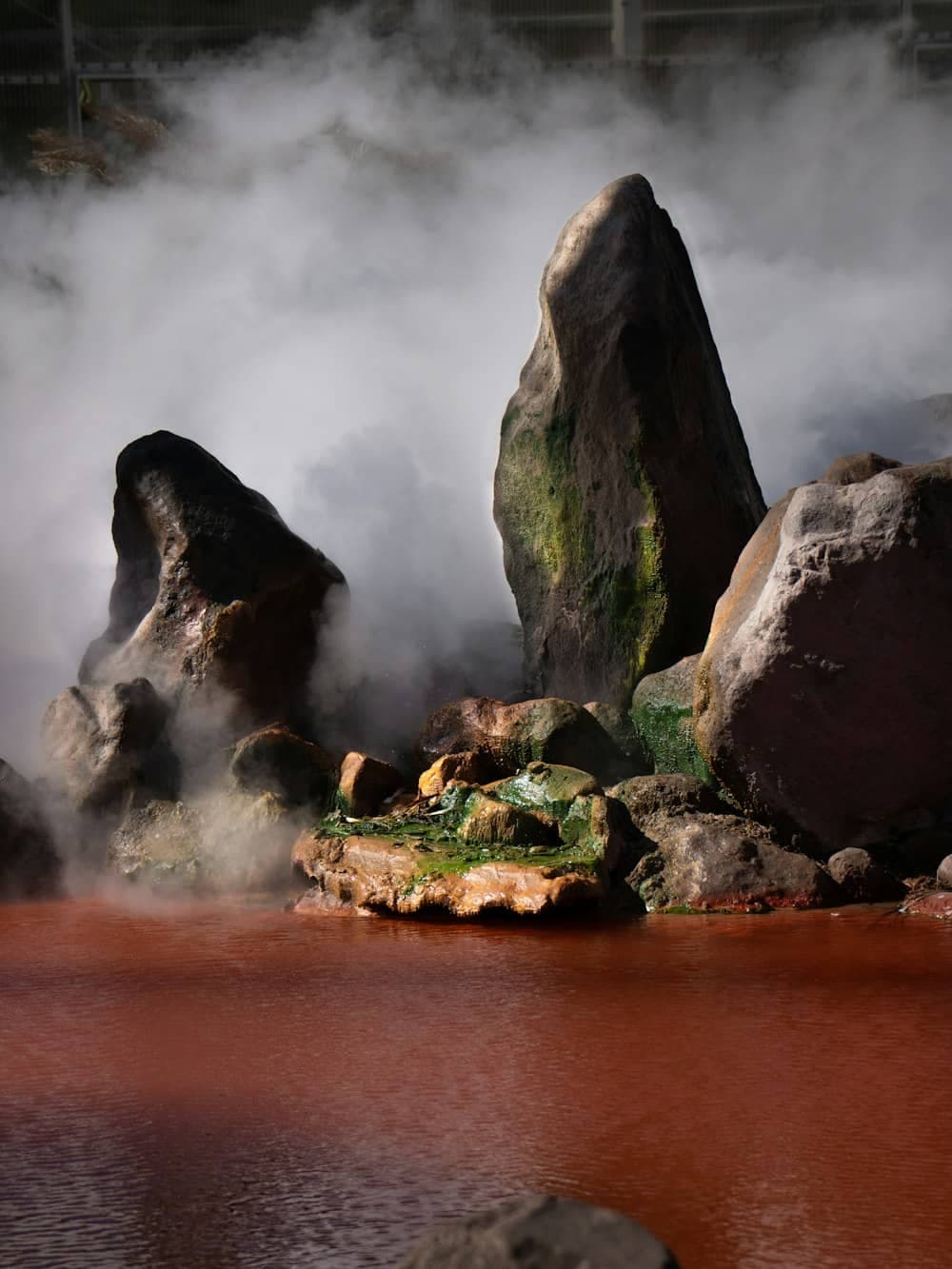
Red Water
Karahayıt's emblem — a travertine outflow that iron oxide stains in tones of red, orange and brown; local folk regard it as healing.
A thermal town about 5 km north of Pamukkale; known for the red travertines formed by its iron-oxide-rich hot waters and for its thermal hotels.
While the travertines of Pamukkale are pure white, the springs of Karahayıt come in shades of red, orange and brown. The difference lies in the composition of the water: Karahayıt's thermal water is markedly hotter — it emerges from its source at 50–60 °C — and is rich in iron and other minerals.
When the water reaches the surface and comes into contact with the air, the iron it contains oxidises; deposited together with the calcium-carbonate travertine, this iron oxide gives the sediment its reddish-brown colour. The result is a natural formation of an entirely different colour that complements the white terraces of Pamukkale.
Thanks to its abundant, hot thermal water, Karahayıt has grown into a centre for spa and health tourism. The town has numerous thermal hotels, and these establishments feed their own spa pools directly from the thermal springs.
Rather than a short day trip, the area is suited to a spa holiday of several days with an overnight stay; for visitors seeking rest and a thermal cure, it is the natural complement to a Pamukkale excursion. Stalls selling local produce can also be seen in the town centre — Karahayıt pine honey is one of the region's known products.
Karahayıt and Pamukkale are two different faces of the same geothermal system; the distance between them is about 5 kilometres. Many visitors spend the day at the Pamukkale travertines and Hierapolis, then round it off by staying the night in Karahayıt's thermal hotels.
From the sub-topics below, you can explore the town's emblem, the Red Water, and the thermal hotel district separately.
Fees and hours may change — verify before you visit. Last verified: 2026-08