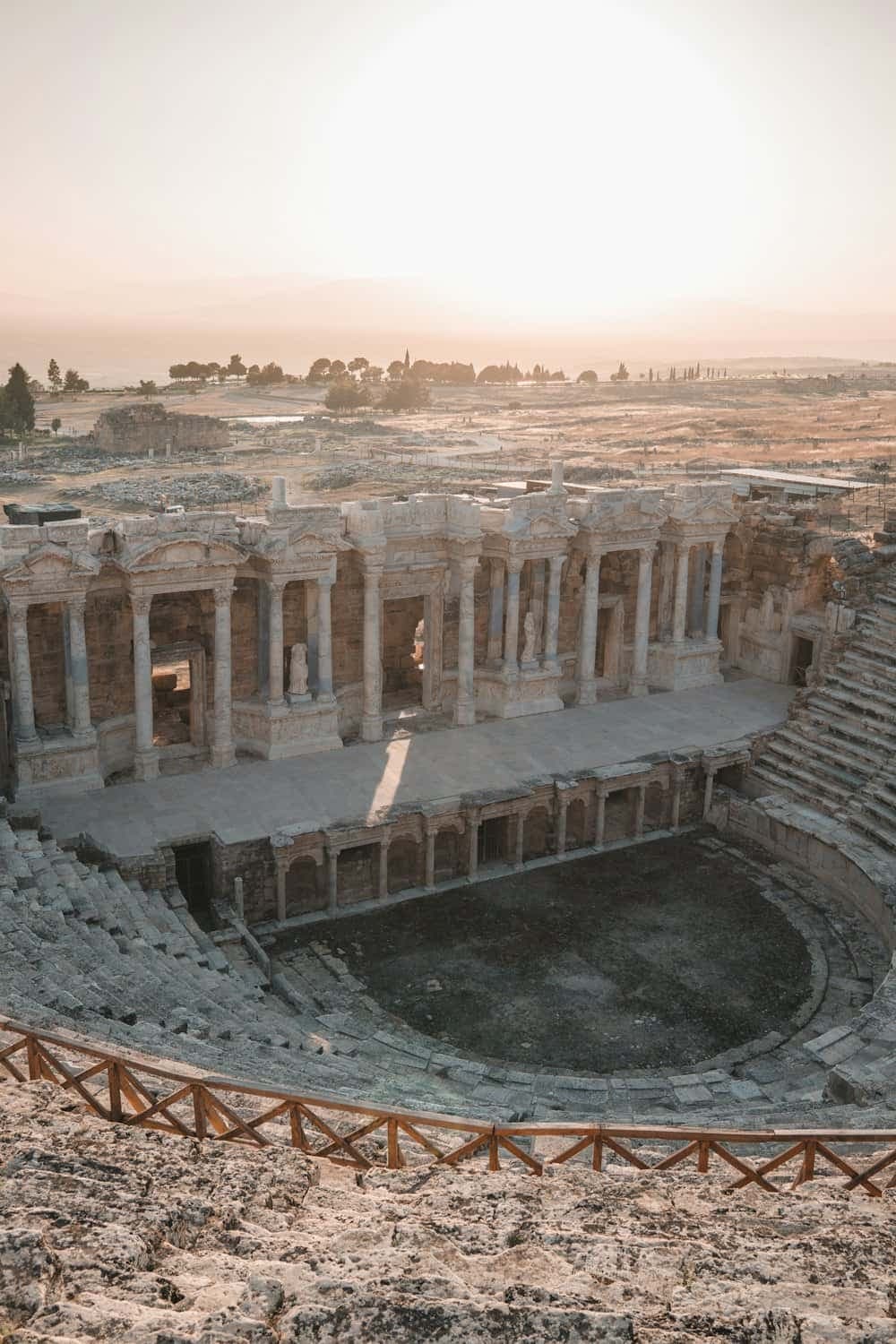
Ancient Theatre
A Roman-era theatre carved into the slope, seating roughly 12,000. Its stage reliefs are largely preserved.
DENİZLİ · AEGEAN
White travertine terraces, ancient Hierapolis and the red thermal water of Karahayıt — all within a day. Walk atop a thousand-year spa tradition.
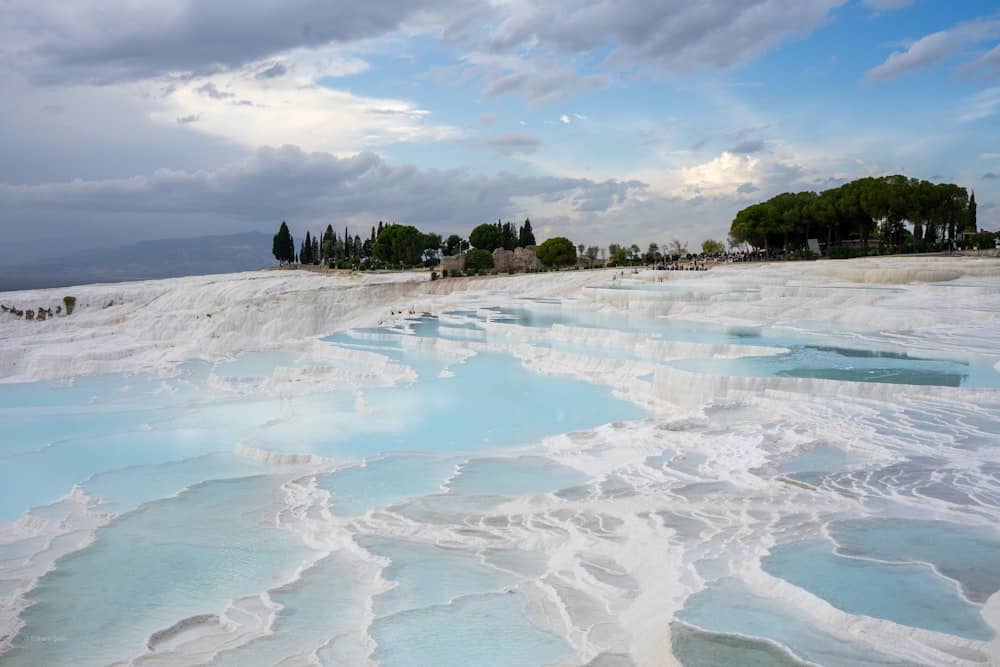
PAMUKKALE
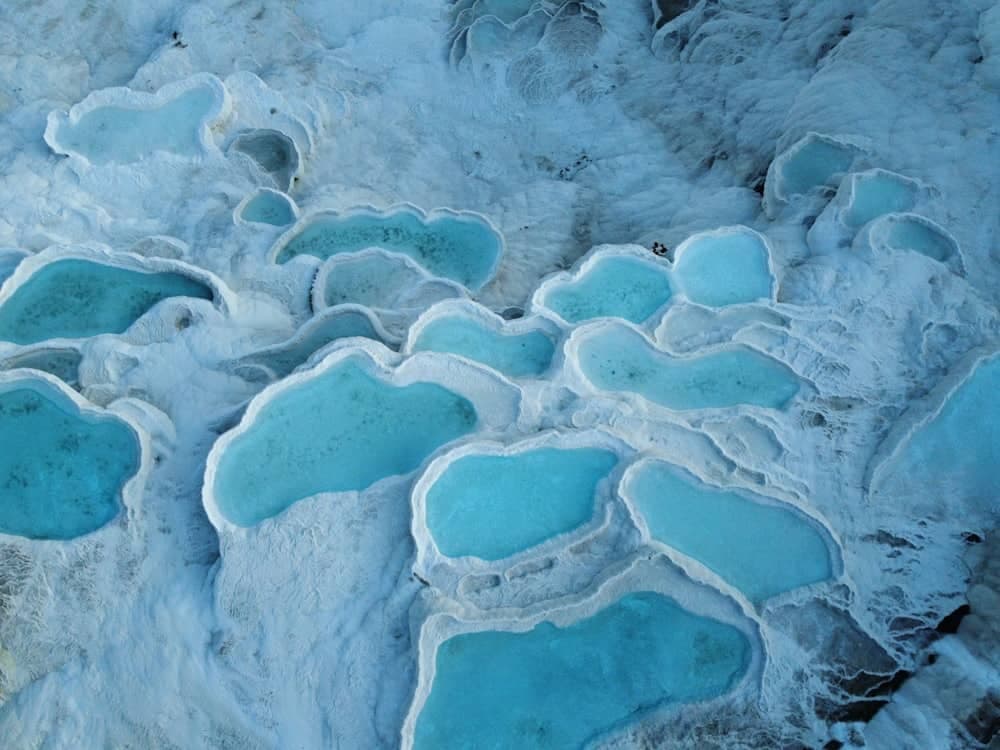
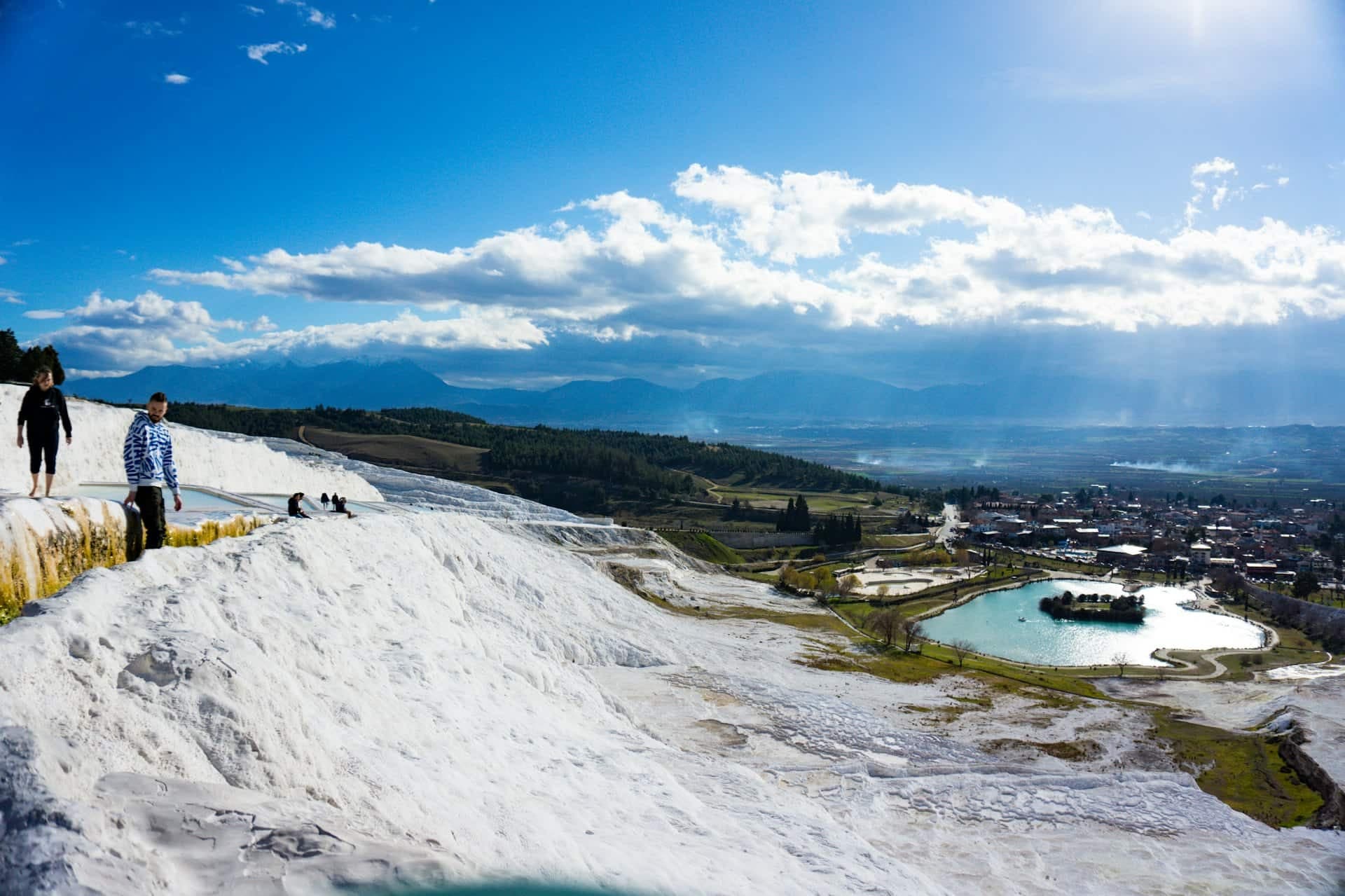
Calcium-rich thermal water built these snow-white travertine terraces over millennia. You enter barefoot only; sunset from the upper terrace is the region's signature.
Read more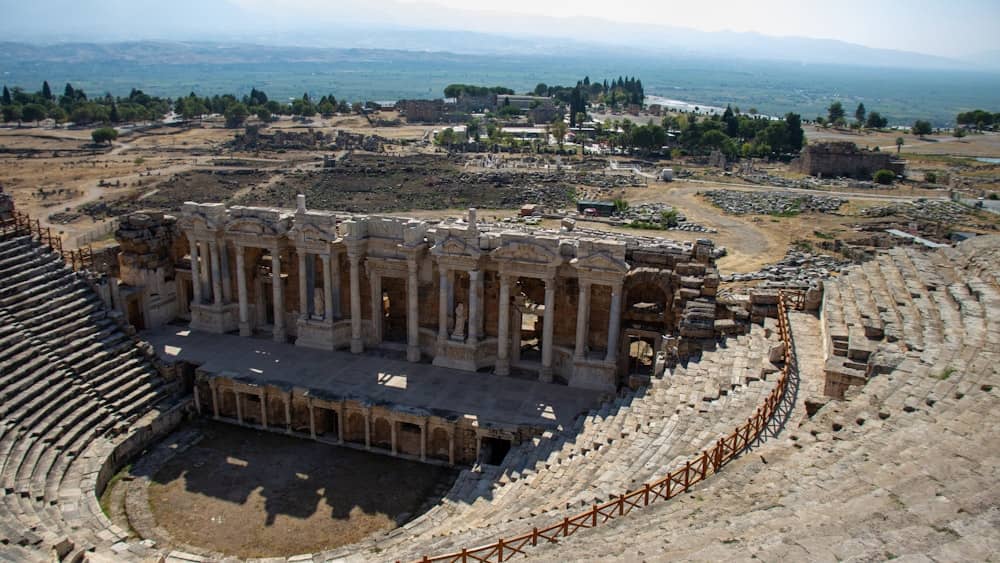
HIERAPOLIS
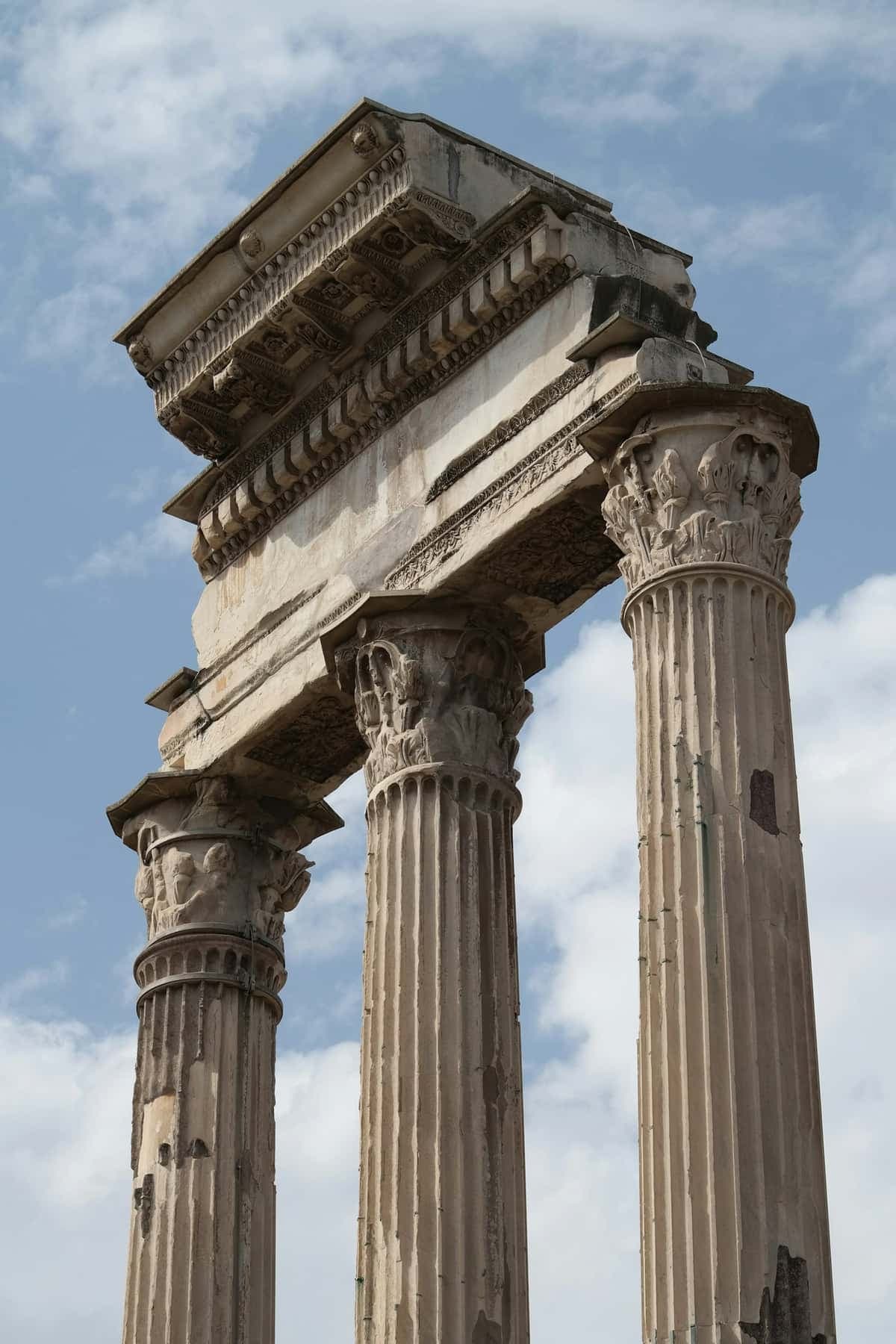
The Greco-Roman city lying just above the terraces. Since 1988 it forms a single mixed UNESCO World Heritage site together with Pamukkale; its 12,000-seat theatre and vast necropolis still stand.
Read more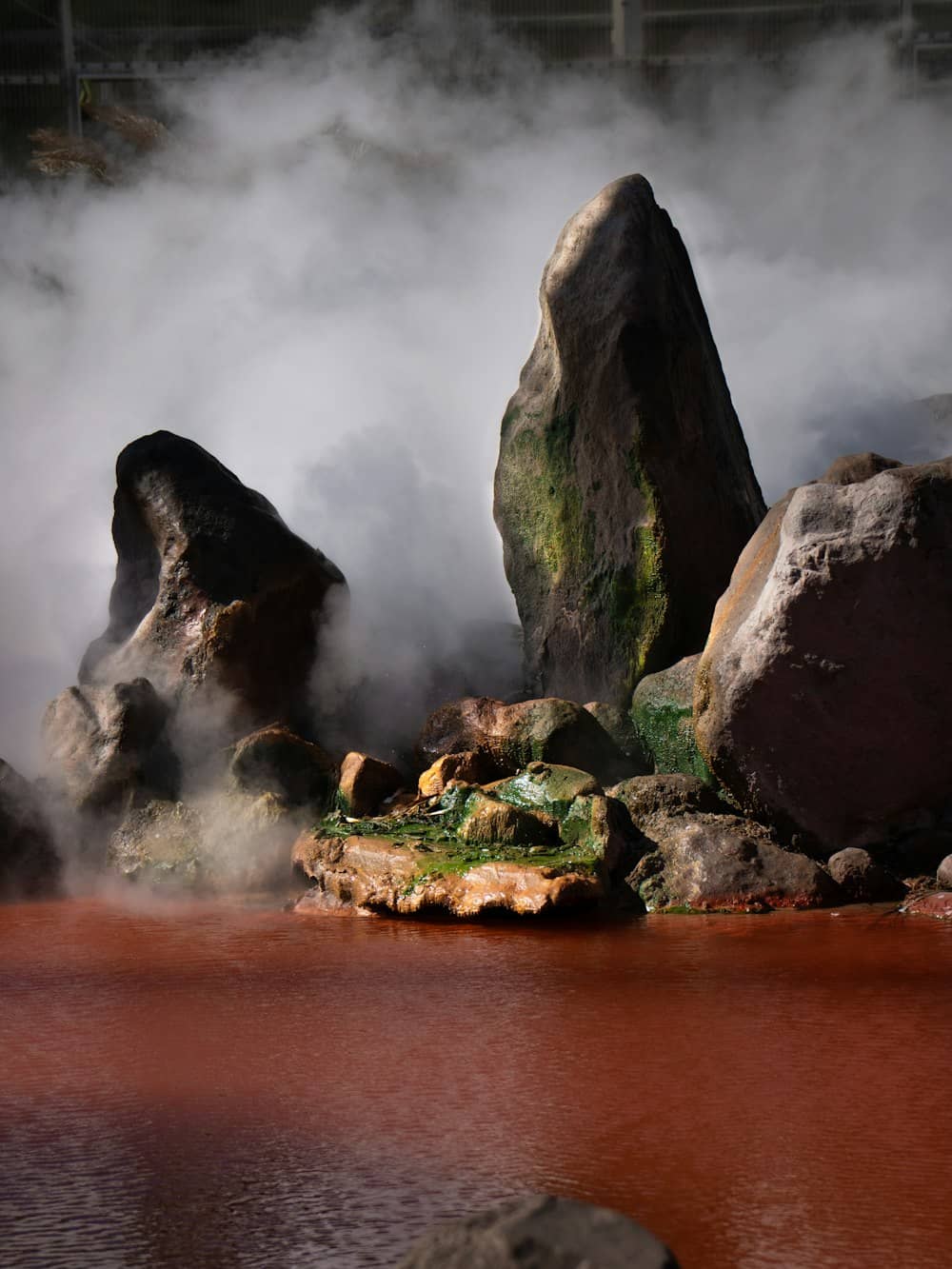
KARAHAYIT
About 5 km north of Pamukkale. The same aquifer, a higher iron-oxide content: here the terraces and springs run red-orange. Same geology, different mineral.
Read moreA Roman-era theatre carved into the slope, seating roughly 12,000. Its stage reliefs are largely preserved.
One of Anatolia's largest ancient cemeteries, stretching for kilometres with tumuli, sarcophagi and house-type tombs.
A thermal pool where you swim among ancient columns sunk by an earthquake. The water stays warm year-round.
Hierapolis was founded in the 2nd century BC by the Kingdom of Pergamon and, thanks to its thermal springs, became a centre of health and faith in antiquity. Under Rome it flourished with its theatre, baths and monumental streets.
The travertines beneath the city formed over tens of thousands of years as calcium-rich thermal water precipitated, and they are still growing today. This rare pairing of nature and culture placed the site in UNESCO's uncommon mixed-heritage class.
Pamukkale and Hierapolis were inscribed together on the UNESCO World Heritage List in 1988. Within the protected area, entering the terraces with shoes and polluting the water are forbidden.
Featured activities from verified businesses in Pamukkale.
Balloon rides, ATV safaris, ancient-city tours and thermal experiences — from verified businesses.
Local flavours, meze and kebab; terraced restaurants and cafés.
Denizli textiles, çini tiles and handmade souvenirs.
Airport transfers, VIP vehicles and in-town taxis.
Licensed exchange bureaus; safe conversion at current rates.
Karahayıt is a separate village about 5 km north of Pamukkale. It draws on the same aquifer but its water runs red from iron oxide. You can visit both in one day.
No. You enter the terraces barefoot only — both a conservation rule and because the surface is slippery. You carry your shoes.
Half a day covers the travertines and Cleopatra's Pool; plan a full day to also see Hierapolis, the necropolis and the theatre.
Your payment is secured at booking but does not reach the business right away. When you receive the service the business scans your QR code; only then is the money released. So no one is paid before you get what you booked.
Yes. The refund rate is tiered by how long remains before the service: a full refund when you cancel early, decreasing rates as the time approaches. Cancelling after the service time counts as a no-show.