Hierapolis — The Ancient City Above the Travertines
A Roman-Byzantine city built just above the white travertines and inscribed on the UNESCO World Heritage List; known for its healing thermal springs, its vast theatre and its extensive necropolis.
From white travertine terraces to the ancient ruins of Hierapolis, from thermal springs to hillside villages — explore the Pamukkale region in depth.
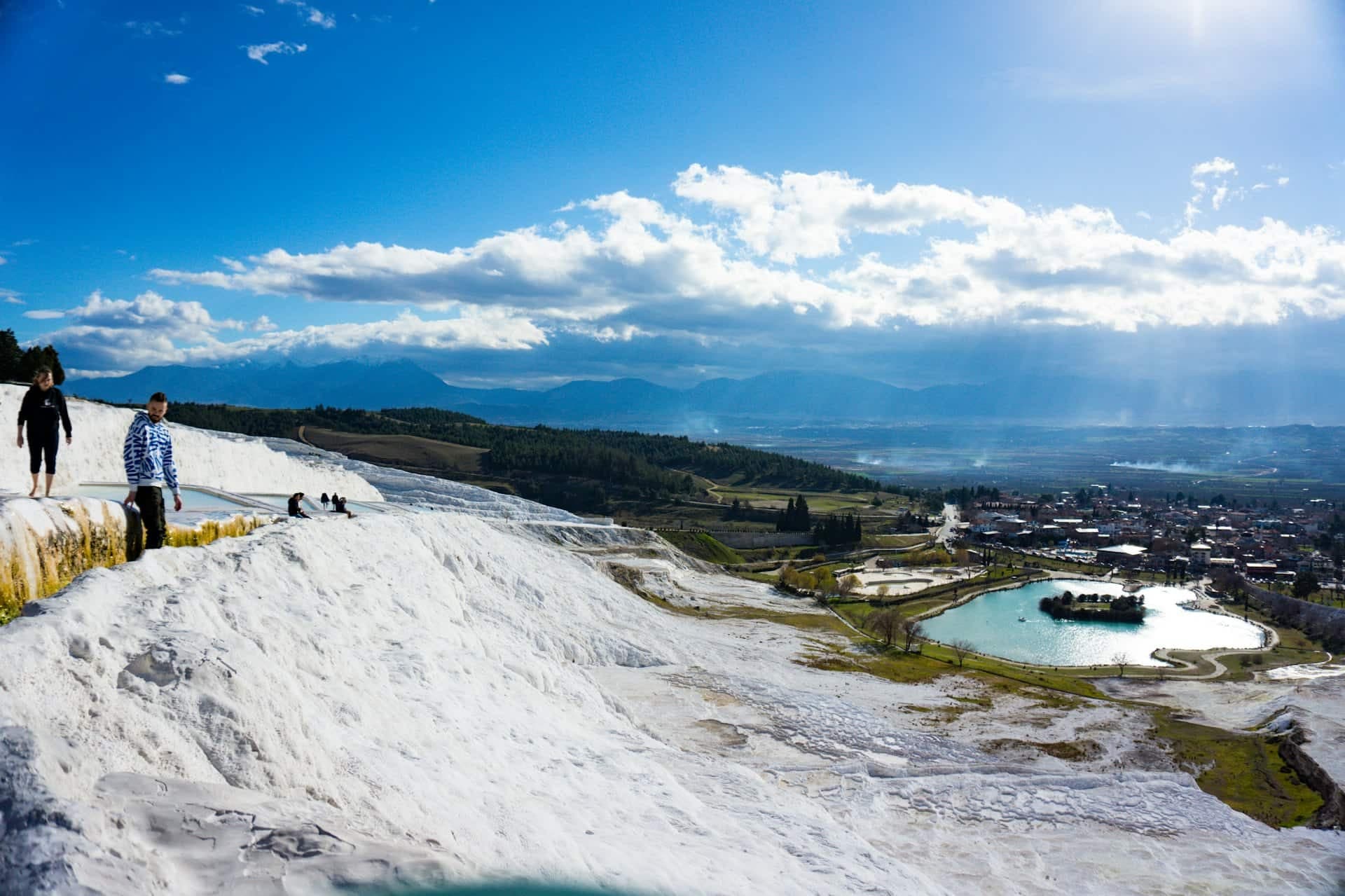
Pamukkale, in Turkey's Denizli province, is a UNESCO World Heritage Site where nature and history meet in a truly singular way. Its name means 'cotton castle' — the white travertine terraces, built up over thousands of years by calcium-carbonate-rich thermal waters cascading down the hillside, look from a distance like a fortress carved from snow or cotton.
The region is more than a natural wonder: the ancient city of Hierapolis sits directly above the terraces. Roman and Byzantine-era ruins — a theatre, a necropolis, and a sacred pool — form a rare open-air museum woven into the geology itself.
Use the topics below to explore Pamukkale's travertine terraces, Cleopatra's Antique Pool, and the sunken columns within the pool, one at a time. Each page carries history specific to that spot and practical visitor information; some experiences link directly to a bookable activity.
Starting your visit early in the day helps you avoid both the heat and the crowds, while the golden hour from the upper terrace offers a view unlike any other.
A Roman-Byzantine city built just above the white travertines and inscribed on the UNESCO World Heritage List; known for its healing thermal springs, its vast theatre and its extensive necropolis.
A thermal town about 5 km north of Pamukkale; known for the red travertines formed by its iron-oxide-rich hot waters and for its thermal hotels.
White travertine terraces woven down the hillside by calcium-carbonate-rich thermal waters; famous for the barefoot walk and its sunset views.