Kaleiçi and the Historic Market
Denizli's first settlement in the Seljuk period; today a market where the goldsmith, the coppersmith and the blacksmith work side by side.
The city most visitors to Pamukkale only pass through: the centre of textiles, of the rooster emblem, and of an eight-hundred-year-old market.
Denizli sits at the centre of the Çürüksu (Lycus) Valley, within less than an hour of every archaeological site around it. For most visitors coming to Pamukkale it is a point of transfer between the bus station or the airport and the travertines.
Yet the city is the most practical base for seeing the region: the roads to Hierapolis, Laodicea, Kaklık, Buldan and Aphrodisias all branch off from here. Setting up your accommodation here and going in a different direction each day is a common arrangement, and it works.
The city's own identity is textiles. Denizli's home-textile production is known across the country; Buldan's loom and this industry are two different scales of the same valley.
The distances explain the choice: Laodicea is about 6 kilometres from the city, Pamukkale and Hierapolis about 20, Kaklık Cave about 30, Buldan and Tripolis about 46. Aphrodisias lies outside the province and takes about an hour and a half by road.
So almost every stop in the region is close enough to set out for from Denizli and return from on the same day. Unpacking once and going in a different direction for five days is both cheaper and easier than staying in a different town every night.
The emblem of the city is the rooster, and you see it everywhere in Denizli: in the squares, on the signboards, in the emblems of institutions. The Denizli rooster is a breed known for its long crow; the crow is reported to last between twenty and thirty seconds.
How far back the emblem goes is disputed. Finds depicting a rooster have come out of the excavations at Laodicea and Tripolis; these are taken as grounds for the reading that the motif has been in the area for some two thousand years. A claim of direct continuity with today's breed, however, is not proven.
The most concrete stop in the city is Kaleiçi and its market, which has stood in the same place since the Seljuk period; for the detail, see the Kaleiçi page below.
The second stop takes you outside the city: the cable car links Denizli to the Bağbaşı highland at about 1,400 metres. For the highland and the cable car, see the page below.
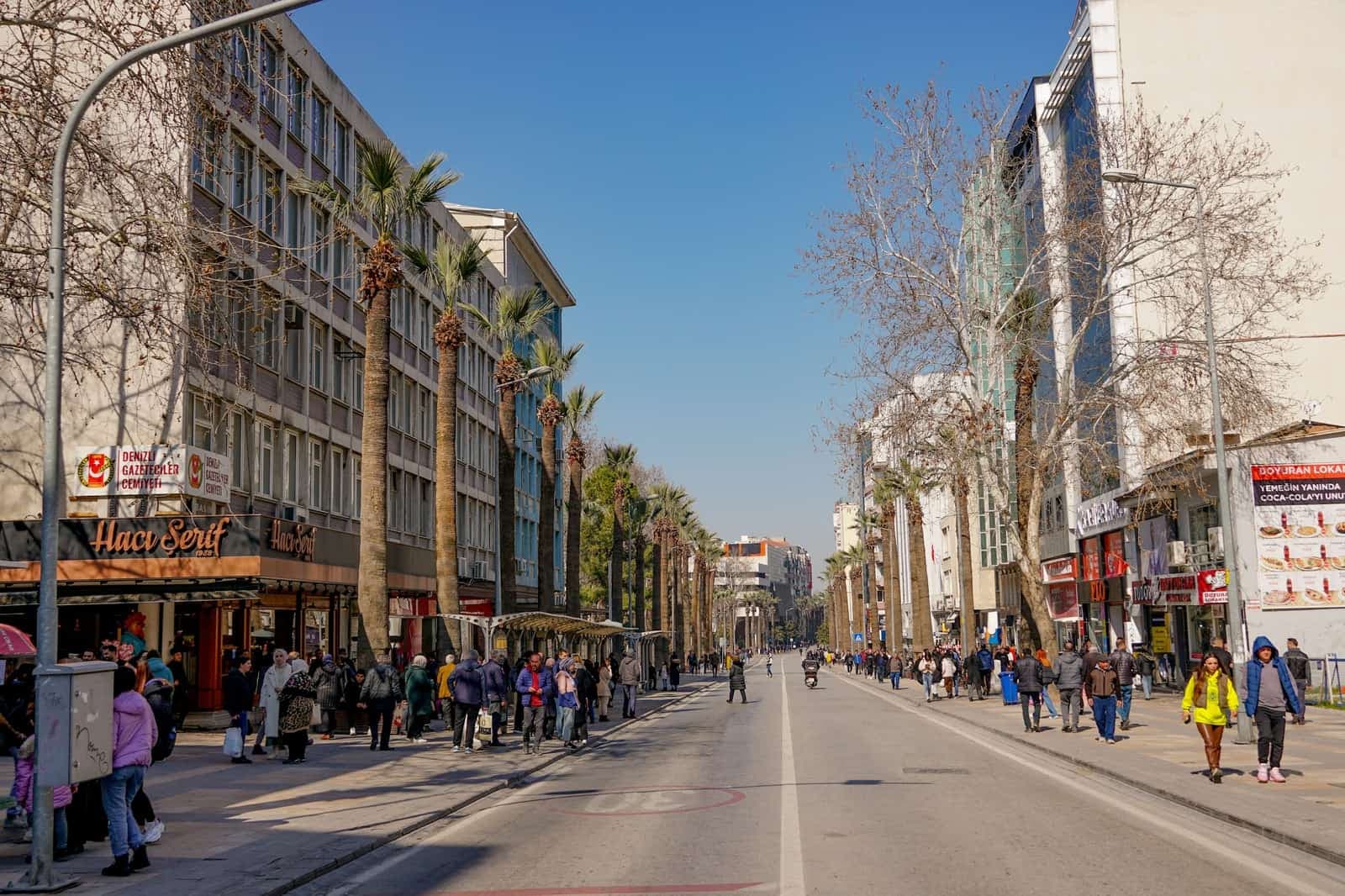
Beyond these, Denizli answers not with a list of monuments to be visited but with its everyday life: with its wide boulevards, its crowded pavements and its own confectioner, it is an ordinary, working Anatolian city.
The way to see the city follows from that: you set out for the archaeological sites in the mornings and walk the boulevard in the late afternoon. Denizli's pavements are crowded in the evening hours, and it is then that the city really shows itself.
Fees and hours may change — verify before you visit. Last verified: 2026-08
Denizli's first settlement in the Seljuk period; today a market where the goldsmith, the coppersmith and the blacksmith work side by side.
The line running from the city up to a highland at about 1,400 metres; it has been working since 2015 and offers the city's fastest change of scenery.