Skip to content
Pamukkale

Sebasteion — The Gallery of Reliefs

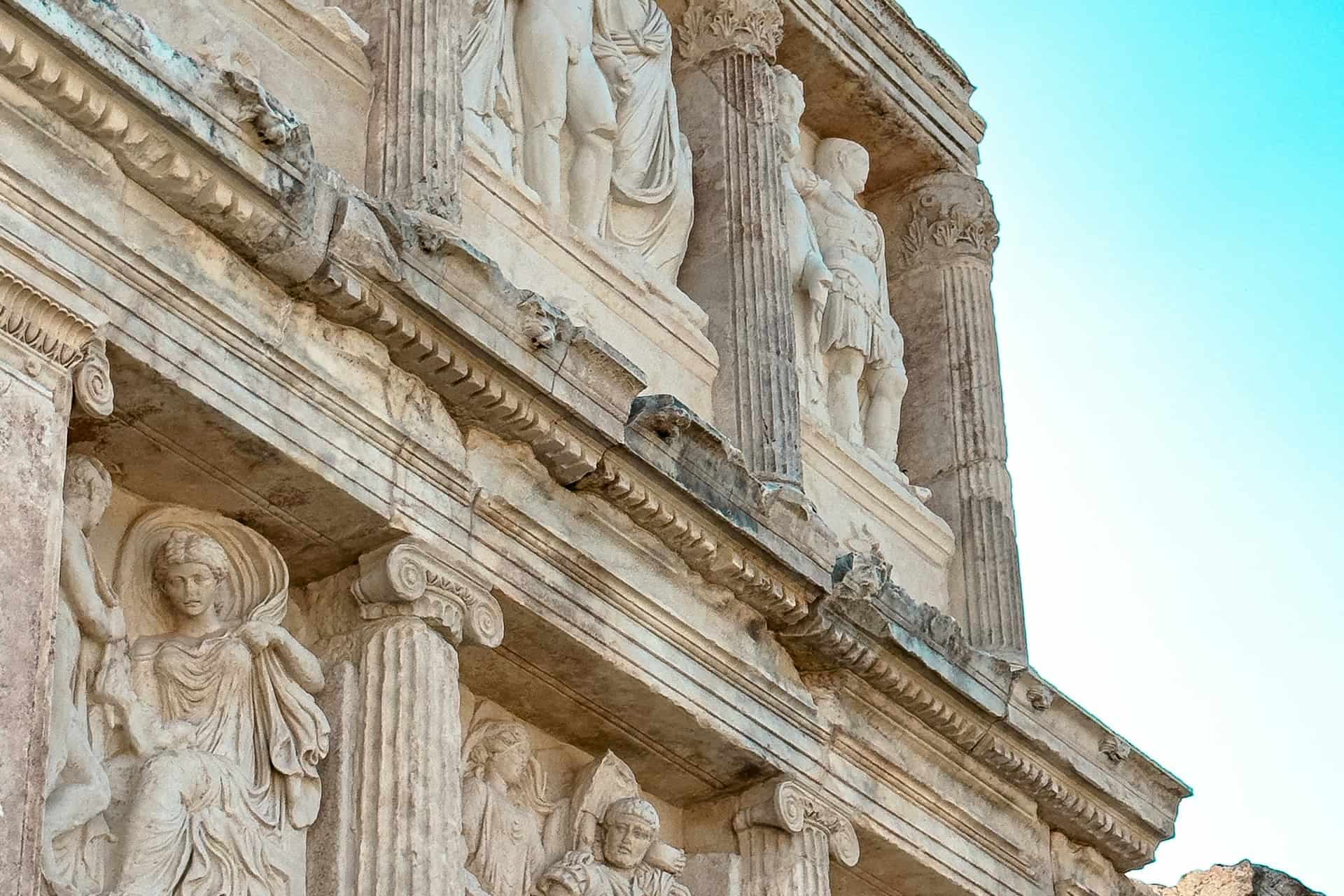
A building complex dedicated to the imperial cult, made up of two three-storey porticoes; with its marble reliefs it carries a visual programme with few equals in the Roman world.

To Aphrodite and to the Emperors

The Sebasteion is a building complex dedicated jointly to the goddess Aphrodite and to the Julio-Claudian emperors, Rome's first dynasty. Its construction spread over two generations: it ran from about AD 20 to 60, from the reign of Tiberius to that of Nero.

The complex consists of a temple in the Corinthian order and a narrow processional way running up to it. On either side of this way, about 90 metres long and 14 metres wide, rose two long buildings in the form of three-storey porticoes; the reliefs covered the upper two storeys of those buildings.

The complex was brought to light in 1979 by the excavation director Kenan Erim.

The Relief Programme

About eighty of the reliefs have come down to us. The panels run three separate strands together: mythological scenes, depictions of emperors setting out imperial ideology, and allegorical figures — among them personifications of the peoples brought into the empire.

That a Roman emperor should appear on the same façade and at the same scale as gods and heroes of myth is why this programme gives the impression of having been designed at the centre of the empire rather than in a provincial city. The workmanship that carried the reliefs belongs to the city's own sculptors.

Where the Reliefs Are Today

A substantial part of the reliefs is displayed not on the site but in the city's museum; the Sevgi Gönül Hall, opened for this purpose in 2008, presents the panels in conditions suited to their conservation and in an arrangement that makes the coherence of the programme visible.

So you see the Sebasteion at two stops: the building itself here, the narrative it carried in the museum. Seeing the two one after the other gives a completeness that neither offers on its own — for the museum, see the Aphrodisias Museum page.

Other pages in this section