Sebasteion — The Gallery of Reliefs
A building complex dedicated to the imperial cult, made up of two three-storey porticoes; with its marble reliefs it carries a visual programme with few equals in the Roman world.
The monumental gate opening onto the sanctuary of Aphrodite; with its sixteen columns set out in four rows and their spiral-fluted shafts, it is the emblem of the city. What stands today was arrived at by returning most of its stones to their places.
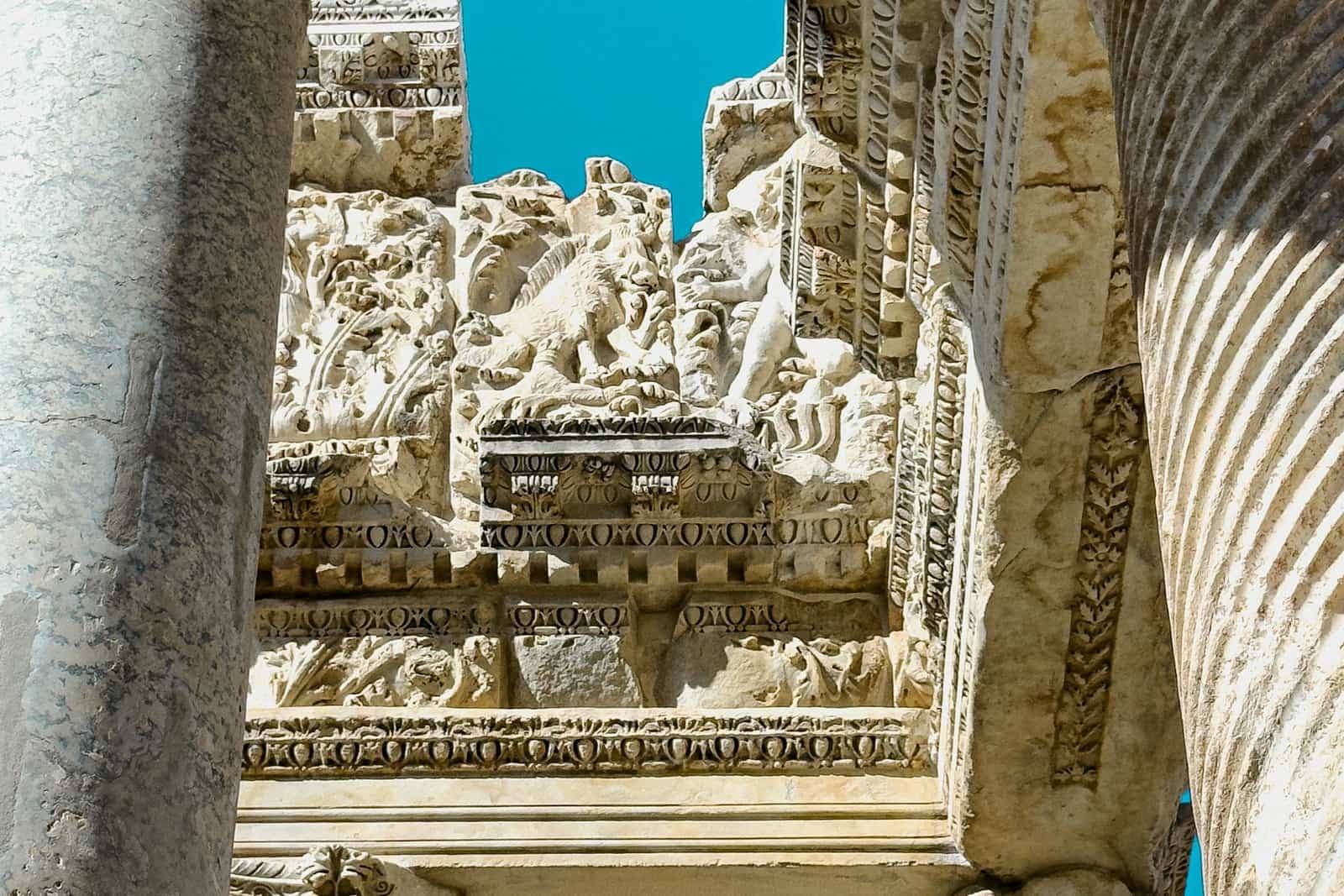
The tetrapylon, whose name means 'four gates' in Greek, is a monumental entrance marking the passage from the city's main street into the sanctuary of the temple of Aphrodite. It carries sixteen columns set out in four rows; carved pediments on every side rest on those columns.
The spiral fluting on the shafts of the front row is the structure's best-known detail. The plant ornament and the figured reliefs on the pediments show what the city's sculptors were able to do on architecture — at Aphrodisias, stone is a means of expression as much as a building material.
The structure seen today is neither a copy nor a reconstruction: it was raised by anastylosis, the method of establishing where the scattered stones belonged and setting them back in place. The work began in 1983, continued until 1990, and the structure was completed in 1991.
About 85 percent of the blocks in the structure are original — that is, most of the stones you see are the very stones set here two thousand years ago.
Kenan Erim, the archaeologist who directed the excavation from 1961 until his death, was both the originator of the Tetrapylon's re-erection and the man who saw it through. He died on 3 November 1990, very close to the completion of the work.
Erim is buried at Aphrodisias: his grave lies east of the Tetrapylon, of plain white stone from the city's own marble quarry. That an archaeologist who gave half a lifetime to bringing this city to light lies beside the gate he raised is among the quietest details of the site.
A building complex dedicated to the imperial cult, made up of two three-storey porticoes; with its marble reliefs it carries a visual programme with few equals in the Roman world.
About 270 metres long, with thirty rows of seating and room for thirty thousand; closed at both ends, it is an unusual structure among Greek stadiums.
The museum where the statues, reliefs and sarcophagi from the excavation are displayed; one of the rare examples built within the archaeological site itself. A substantial part of the Sebasteion reliefs is here.