Skip to content
Pamukkale

Aphrodisias — The City of Marble and Sculpture

The richest ancient city within day-trip reach of Denizli — but not in Denizli: Aphrodisias lies in the village of Geyre, in the Karacasu district of Aydın province. It was inscribed on the UNESCO World Heritage List in 2017 together with its own marble quarries.

Where It Is — and Why It Is in This Guide

Aphrodisias lies just outside the village of Geyre and belongs administratively to the province of Aydın, to the district of Karacasu — not to Denizli. Its place in this guide is not administrative but geographic: it is the richest archaeological site a visitor setting out from the Çürüksu Valley can reach and return from within a day.

As the crow flies it is some thirty kilometres to Denizli, but Akdağ rises between the two settlements. Because the road goes around the mountain, the journey takes about an hour and a half on the D-585, towards Tavas; the closeness on the map is misleading.

Marble, the School of Sculpture and the 2017 Inscription

A few kilometres to the north-east of the city lie quarries of high-quality marble. These quarries gave Aphrodisias an advantage rare in the ancient world: the stone was at the city's own foot. The monumental buildings, and the statues, reliefs and sarcophagi as well, all came out of the same seam.

In time this production became a tradition known by the city's own name. The Aphrodisias School of Sculpture, running from the 1st century BC to the 5th century AD, is known for work reaching from portrait sculpture to mythological figures; the unfinished statues found on the site are among the best evidence we have today for how it worked its stone.

UNESCO inscribed the city on the World Heritage List on 9 July 2017. That the inscription has two components is an important detail: it covers not only the city enclosed by its circuit walls but also the marble quarries to the north-east — what is protected is the source that made the works as much as the works themselves.

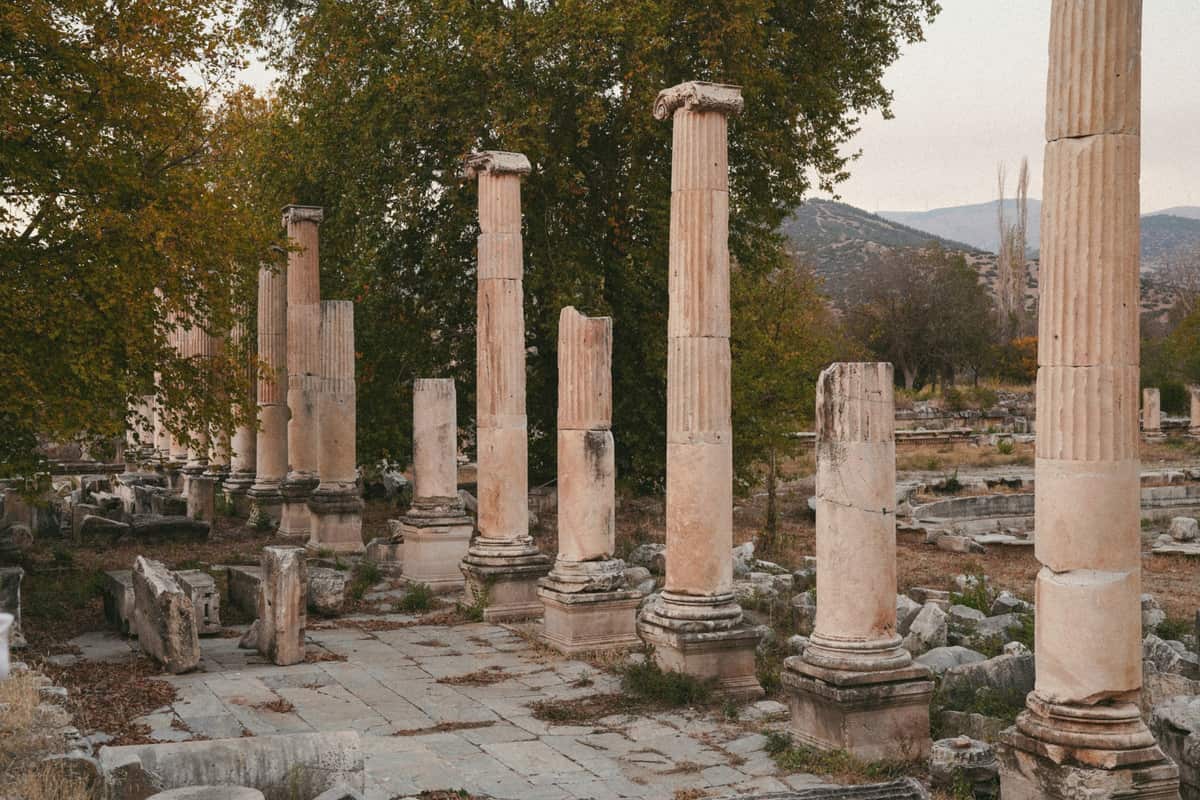
A standing row of Ionic columns at Aphrodisias, with hills behind.
The colonnade around the South Agora — the city's marble was worked only a few kilometres from the quarries it was carried from.

What There Is to See on the Site

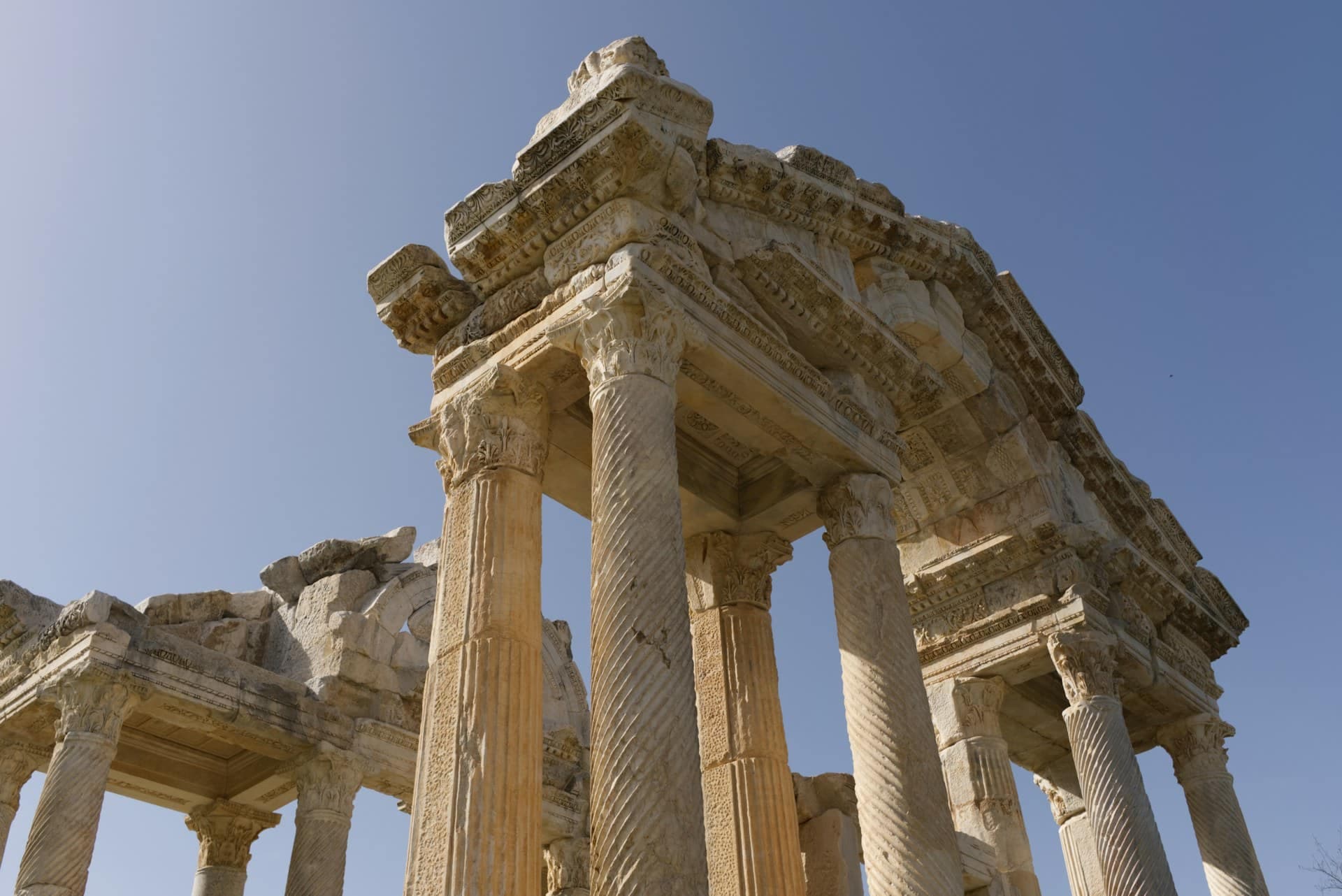
The site spreads over a wide area within the circuit walls that run around it, and is covered on a single walk. The Tetrapylon, the monumental gate opening onto the temple precinct; the Sebasteion, with its reliefs, dedicated to the imperial cult; the best-preserved stadium of the ancient world; and the museum holding the excavation finds are the site's four main stops.

The sub-topics below take these four stops one by one. The area is large and there is little shade; moving the walk to the morning or to late afternoon makes a noticeable difference in the summer months.

Visitor Information

Location
Geyre village, Karacasu / Aydın — it belongs to the province of Aydın, not to Denizli
By road
About 1.5 hours from Denizli on the D-585 (towards Tavas)
Public transport
With changes: Denizli–Tavas minibus + taxi ≈2 hours; or the Nazilli–Karacasu dolmuş (roughly every 20 minutes) + taxi or an infrequent dolmuş ≈2.5–3 hours
Tickets
Entry to the archaeological site is paid; it is separate from the Pamukkale-Hierapolis ticket
Müzekart
Valid for citizens of the Republic of Türkiye
Suggested duration
3–4 hours (excluding travel)

Fees and hours may change — verify before you visit. Last verified: 2026-08

Book the Aphrodisias day trip

Explore further