Buldan Weaving — A Registered Cloth
A light cloth woven from fine cotton yarn and recognised by its crinkled surface; the geographical indication applied for in 2010 was completed in 2016.
About 46 km from central Denizli — a town that grew up to the sound of the loom, whose bay-windowed houses are protected as an urban conservation area, and which carries its own ancient city inside its boundaries.
Buldan is a district north-west of Denizli, set at about 690 metres. What defines the town is not its view but its craft: here weaving is everyday work carried on beneath individual houses and in small workshops, not a display put on for a museum.
The fine cotton cloth known as Buldan cloth takes its name from here, and the two names are spoken together. For the detail of the weaving, see the Buldan Weaving page below.
Denizli's large textile industry and Buldan's loom are the two ends of the same story: one belongs to the factory, the other to the house. Walking the town, you see the two standing side by side.
What surprises those walking the town for the first time is how scattered the weaving is: there is no single centre of production, and the work is spread across a great many small workshops and households. For that reason there is no such plan in Buldan as 'visiting the weaving factory'; you walk the street and look in through the open doors.
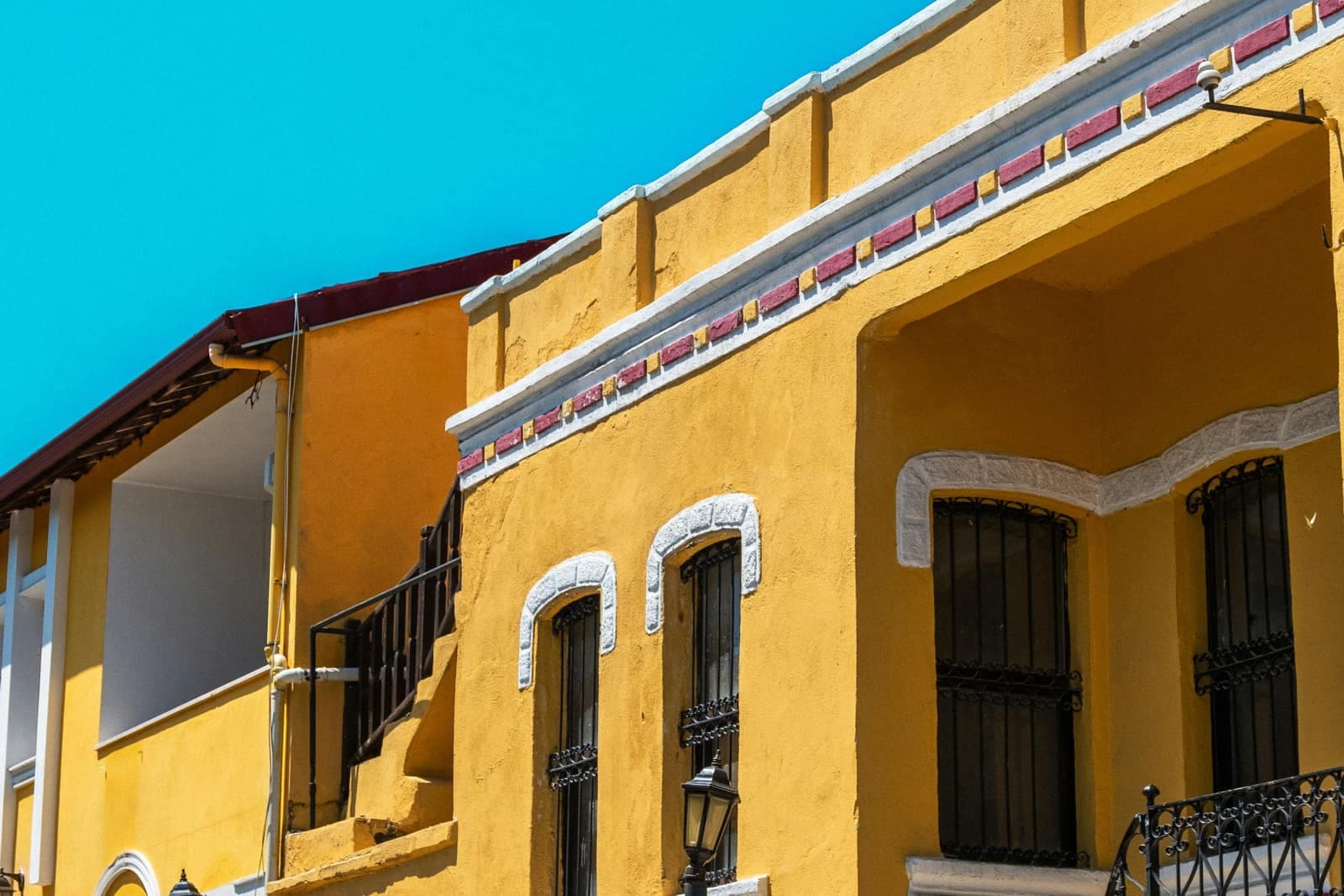
The old quarters of the town, with their timber houses and their bay windows, are protected as an urban conservation area. The narrow streets are steep; the upper floors of the houses project towards the street, and facing bay windows almost close the street over.
Some of the buildings have been repaired, some are waiting to be — walking around Buldan, it is ordinary to come across a house with its timber still exposed beside a restored façade. For the detail, see the Historic Buldan Houses page.
Within Buldan's boundaries, at Yenicekent, lies Tripolis, the third great ancient city of the valley; its excavations have run year-round since 2012. The Tripolis page below describes the city in detail.
Above the town, at about 1,150 metres, Süleymanlı Yayla Lake lies inside a first-degree natural conservation area; it is a quiet lake with water lilies, and people go up to it in summer to cool off.
The town itself is a half-day stop; with Tripolis added, the day is full. For a visitor setting out from Denizli the most practical arrangement is to walk Tripolis in the morning and go up to the town in the afternoon — the site is on the way, and no doubling back is needed between the two.
The Yayla Lake, though, is a separate direction and a separate half-day; rather than being squeezed into the same day, it is planned on its own in the summer months.
Fees and hours may change — verify before you visit. Last verified: 2026-08
A light cloth woven from fine cotton yarn and recognised by its crinkled surface; the geographical indication applied for in 2010 was completed in 2016.
Timber-framed houses with bay windows projecting over the street; a town fabric protected as an urban conservation area.
An ancient city founded on the bank of the Menderes, in the Yenicekent quarter of Buldan; standing where Lydia, Phrygia and Caria meet, it was known by three names.