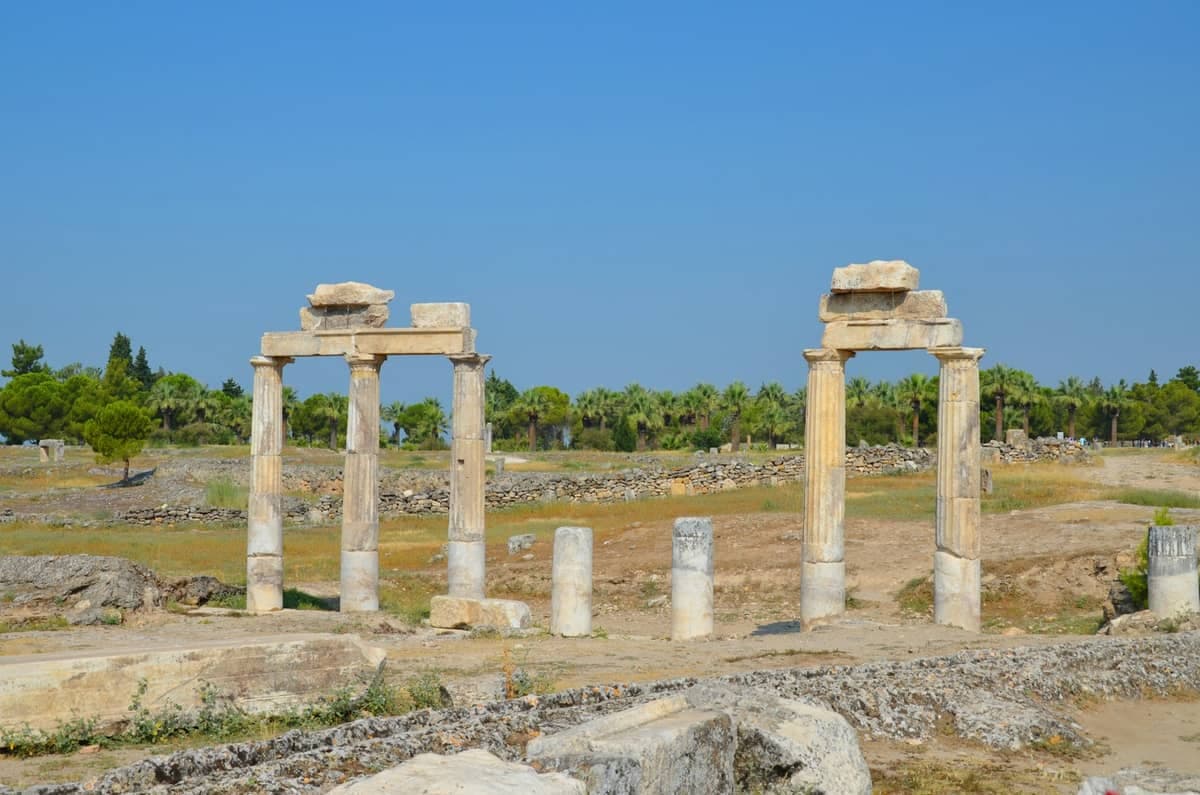
The Sunken Columns
Marble column fragments from the 7th-century AD earthquake resting on the bottom of the Antique Pool — the pool's most photographed detail.
What You're Looking At
Beneath the pool's clear water, large marble column fragments and capitals lie at various angles. They belonged to a Roman-era structure that rose right at the edge of the pool; excavation research attributes these columns to a portico (colonnaded gallery) associated with the sanctuary of Apollo.
A powerful earthquake that struck the region in the 7th century AD toppled the structure's load-bearing columns, dropping them straight onto the spring, into what is now the pool's basin. The columns have remained underwater ever since, barely shifting position.
Why They're So Well Preserved
The constant flow of thermal water and its mineral-rich composition have largely shielded the columns from erosive outside forces. Remaining submerged has also protected them from being moved or looted.
Today, swimmers pass among these column fragments, swimming through the wreckage of an ancient structure — a rare combination anywhere in the world: an active thermal spa interwoven with an archaeological site.
For swimming fees, lockers and season information, see the visitor section of the Cleopatra's Antique Pool page above.